
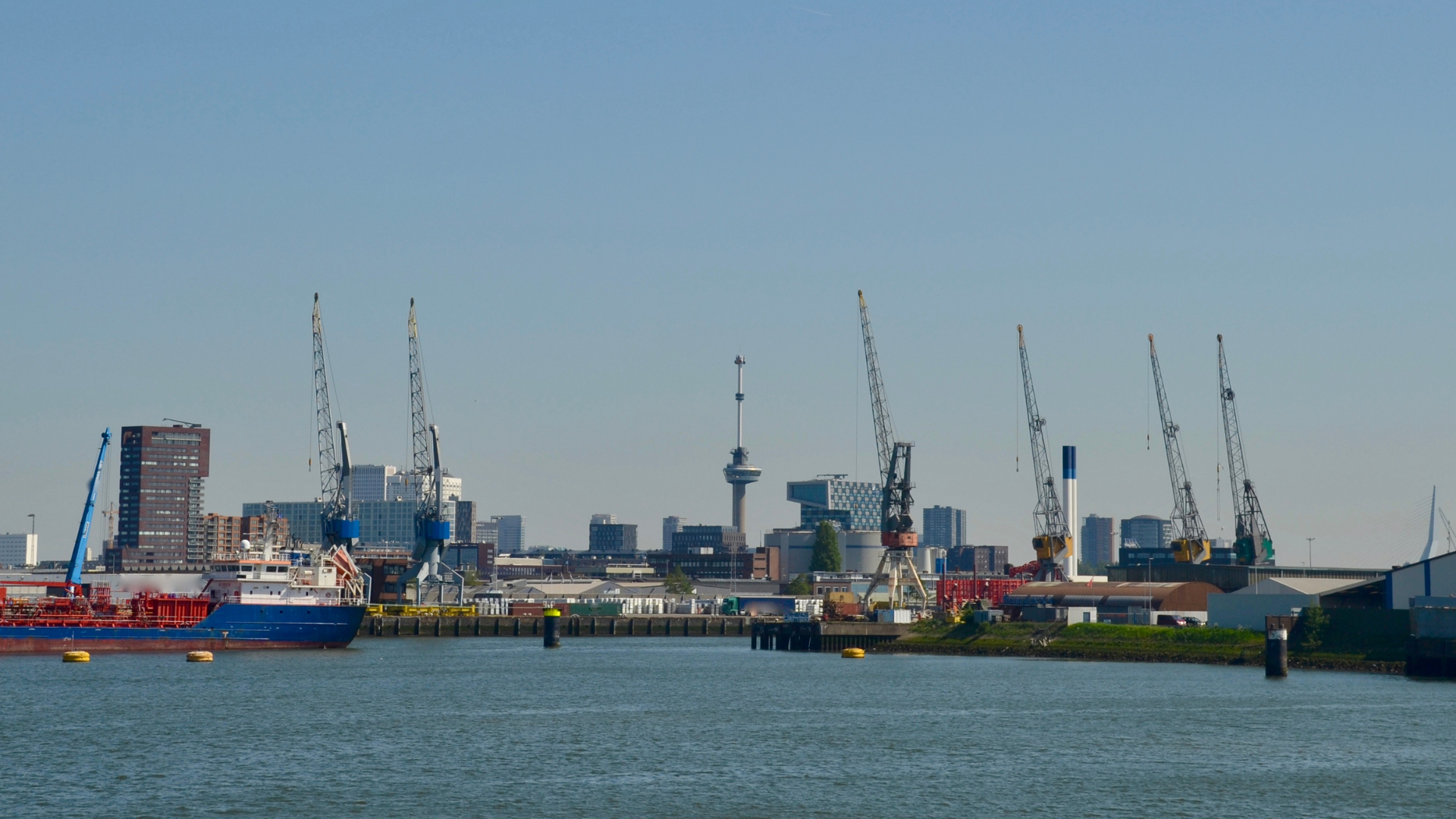
The Port of Rotterdam, Europe’s largest port (approximately 440 million tonnes cargo per year, almost 12% of total port EU tonnage), anchors the heavily industrialized Rijnmond region. Its scale drives significant environmental pressures while exposing it to planetary boundary breaches. The port is a major contributor to GHG emissions (CO₂, CH₄, N₂O) via shipping, fossil fuel handling, industry, and logistics. High NOx, SO₂, PM from vessels and operations degrade regional air quality, affecting public health in nearby urban areas. The impacts on water include: dredging, scrubber discharges, oil spills, chemical runoff, and ballast water introduce pollutants, nutrients, and novel entities. It contributes to ocean acidification and biogeochemical flow disruptions (nitrogen/phosphorus). The impacts on onshore nature include habitat loss/fragmentation from expansion (e.g., Maasvlakte), invasive species, noise, and light pollution. Land system change and biosphere integrity pressures in surrounding delta ecosystems. Other issues are Freshwater stress, aerosol loading, chemical pollution (novel entities) from industrial activities. While regulations have improved some metrics over decades, the port remains a hotspot for cumulative pressures, being a driver of and vulnerable to instability (sea-level rise, extreme weather). The surrounding densely populated area faces liveability challenges from pollution and climate risks.
(based on One Planet Port Vision Report 2026)